a2 + b2 = c2
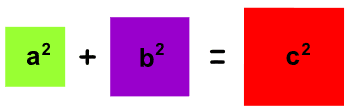
If a triangle contains a right angle (90 degrees), you are able to make a square on each of the three sides. The biggest square will be the exact same size as the two smaller squares put together. The following picture illustrates this fact.
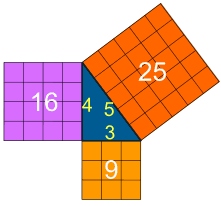 | Let's check if the areas are the same: 32 + 42 = 52 Calculating this becomes: 9 + 16 = 25 It works ... like Magic! |
The two shortest sides of the right angled triangle are called the legs (a & b). The longest side is considered the hypotenuse (c). The square of the hypotenuse is is equal to the sum of the squares of the two legs. Math is simply amazing!

No comments:
Post a Comment